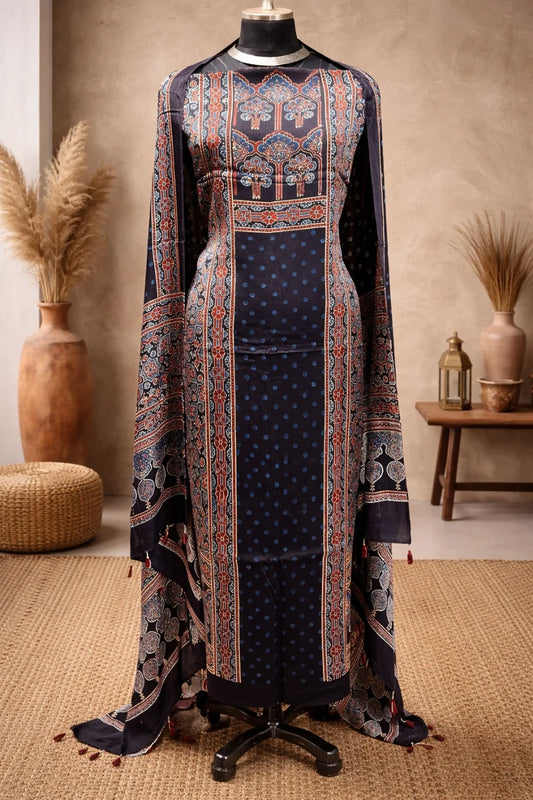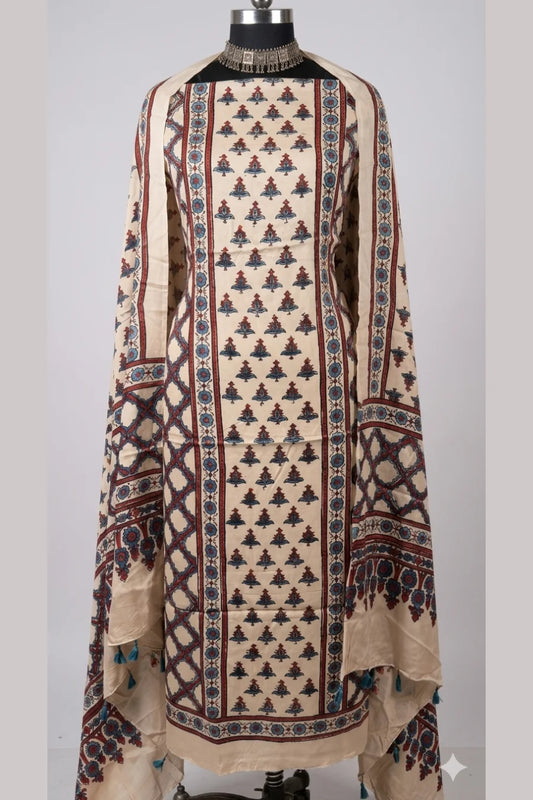

Shibori: The Ancient Art of Resist Dyeing That's Having a Very Modern Moment

There's something almost meditative about the way a Shibori artisan works.
Fold. Bind. Dip. Wait. Unfold.
No two pieces are the same. That's not a flaw in the process; it is the process. And it's exactly why Shibori, a textile dyeing technique with roots stretching back centuries, feels more relevant than ever in a world oversaturated with identical, machine-produced prints.
What Is Shibori?
Shibori (pronounced shi-bo-ri) is a Japanese term for a family of resist-dyeing techniques where cloth is manipulated, folded, twisted, pleated, stitched, or bound, before being submerged in dye. The areas that resist the dye create the pattern. The result is never perfectly predictable, and that unpredictability is the entire point.
The most common techniques include:
Itajime: cloth folded and clamped between shaped boards, creating geometric repeat patterns
Arashi: fabric wrapped diagonally around a pole and compressed, producing diagonal pleated lines
Kumo: pleating and binding specific points to create spiderweb-like burst patterns
Needle Shibori (Nui): hand-stitching rows of thread through fabric, then gathering it tightly before dyeing. This is perhaps the most labour-intensive form, and it shows. The resulting texture, those raised, gathered lines, cannot be replicated by machine.
But Shibori Isn't Just Japanese
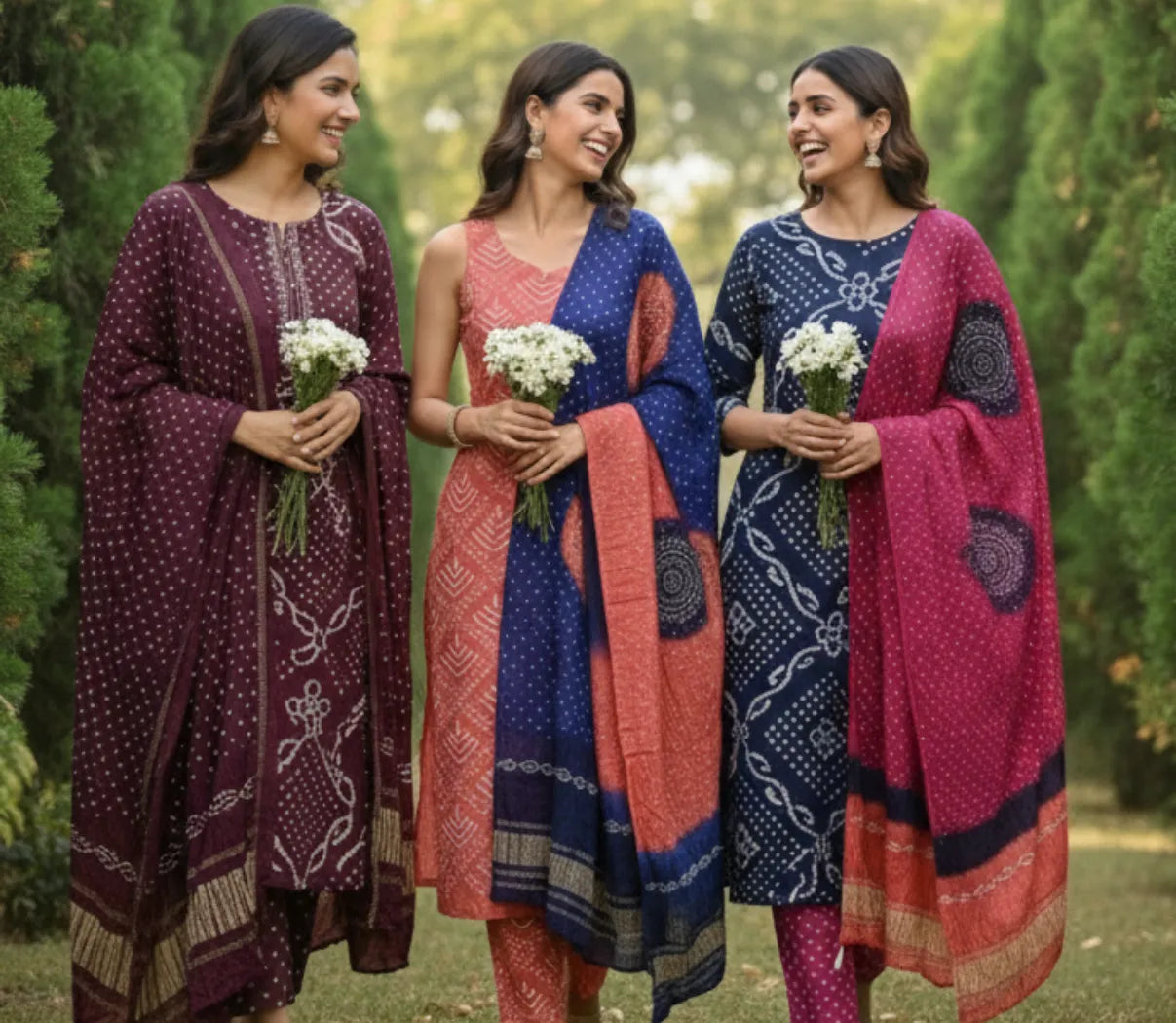
While the word is Japanese, resist-dyeing traditions exist across cultures, across centuries. In India, Bandhani from Rajasthan and Gujarat is a form of tie-dye resist. Shibori as a craft, then, is a universal human impulse: the desire to control chance, to make something beautiful through constraint.
What makes contemporary Indian Shibori particularly interesting is the cross-pollination: the Japanese technique adapted by Indian artisans using Indian fabrics, Indian indigo and natural dyes, resulting in something that is both cosmopolitan and rooted.
What Makes Needle Shibori So Special?
Among all Shibori variants, needle Shibori holds a particular place.
It is slow work. An artisan draws thread through fabric in careful rows, by hand, one stitch at a time, and then gathers the thread tightly before the piece goes into the dye bath. When the threads are removed and the fabric released, those gathered lines bloom into raised texture and pattern.
You cannot rush it. You cannot automate it. Every row of stitching is a decision, and every piece that emerges from the dye bath is unrepeatable.
This is what we mean when we talk about handmade. Not just "not made in a factory," but made with hands that are making choices, stitch by stitch.
Shibori on Different Fabrics
The fabric you use changes everything about how Shibori behaves.
On Chanderi, the fine, slightly sheer Madhya Pradesh weave, Shibori creates something almost ethereal. The lightness of Chanderi means the dye pools softly, and the resist patterns have a watercolour quality. A Shibori Chanderi kurta or saree sits somewhere between traditional and contemporary in a way that makes it deeply wearable.
On Chiffon, Shibori produces flowing, painterly patterns. Because chiffon drapes so fluidly, the fabric almost seems to carry the dye in motion.
On Cotton, the results are more graphic and earthy, with a more matte finish that suits the directness of the technique.
Why Shibori Belongs in Your Wardrobe
The honest answer is this: a Shibori piece is one you will wear for years, not seasons.
Because no two pieces are identical, you're not buying a trend. You're buying an object with a specific history: this fabric, this artisan, this dye bath, this particular afternoon when the fabric was folded and bound.
It also wears beautifully. The texture holds. The indigo deepens with wear and washing in the way that natural dyes do, developing what denim enthusiasts call "character" and what we might simply call a life well lived.
Fast fashion gives you identical. Shibori gives you singular.
At Oroori
Every Shibori piece at Oroori is sourced directly from artisans, no middlemen, no mass production. When you buy from us, you're buying something made slowly, by someone who knew exactly what they were doing.
That's the Oroori promise: craft you can trace, beauty you can trust.
Explore our Shibori collection, and if you want to know more about a specific piece, its technique, or the artisan behind it, just write to us. We love talking textiles.
Shop Shibori at Oroori → theoroori.store/collections/shibori